
Most people think once you’ve built some wealth, the hard part is over.
Bills no longer scare you. Your investments give you a sense of comfort. And you can finally see a future where work becomes optional.
But right when you can see financial independence on the horizon, a new set of challenges – some practical, many psychological – begin to pop up.
First, the nagging sense you need ‘just a bit more’ before you can step back from work. The fear that you’ll be bored, judged, purposeless and lazy without a full-time job. That you won’t be able to ‘keep up’ with your peer group. Or simply the guilt around enjoying yourself and what you’ve built when others are struggling,
And this doesn’t just apply to those who are approaching FI. It also applies to semi-retirement. You’ll face similar challenges, just in a milder form.
The issue, in most cases, isn’t actually money. It’s having enough confidence in what you’re doing to break out of your overly comfortable routine and start living differently.
Over time I’ve noticed the same handful of things people battle with later on the FI journey. Let’s talk about the biggest ones and how to handle them. This is extremely important – because without the right psychology in place, you won’t be able to shift gears and actually enjoy what you’ve built!
If you’re good with money, you’ve probably mastered delayed gratification so well that it’s become your default setting. The trap here is that you become an expert at delaying your own freedom, moving the goalposts for a bigger and bigger goal.
There’s always some risk or concern you can point at to justify why you need ‘more’. The funny thing is, on a spreadsheet, waiting longer always looks smart
Work more > number goes up > plan looks safer > future you is happier
Being highly cautious is seen as prudent. Everyone warns you about the risk of leaving work too early, but very few talk about the risk of working longer than you need to.
The problem is, the mindset that helps you build wealth can stop you from enjoying the benefits of it. Here are a couple of things that can help shift your perspective:
— Try to quantify the cost of One More Year Syndrome. If you keep delaying freedom year after year, what might you be missing out on in that time? Time with kids. Hobbies never enjoyed. Experiences never had. Travel never completed. Personal growth never unlocked.
— Picture yourself looking back 30 years from now. Would you regret leaving full-time work a bit early and having to do some extra work, or delaying your freedom and staying at work far longer than you needed to?
As I see it, the real risk isn’t running out of money. It’s running out of healthy years to enjoy the benefits of having money.
Even when the numbers line up nicely, your brain still craves certainty over the future. So you end up in this weird spot where you’ve got a strong financial position on paper, but you’re still clinging to the safety of full-time work.
Your mind then throws a bunch of objections at you…
Am I crazy to give up this income?
Who am I without my job?
What if I get bored… or regret it?
Will I have any social life?
What do I tell people?
The truth is, it does take courage to do something different. But these ‘problems’ are bigger in our mind than in reality. And all are easily solvable.
Fear causes you to think in all-or-nothing terms. “If my life is different, I lose the benefits of my current life.”
But this is absolutely false. The best workaround for this is dipping your toe into the waters of freedom, rather than treating it like you’re jumping off a cliff 😂
You could take an extra day per week off if your job allows. Move to a less demanding role, or a more interesting part-time job. Outsource more of your duties if you’re a business owner. Take long service leave (or even leave without pay), and treat it like a mini-retirement or sabbatical.
These middle ground options – versions of semi-retirement – are the perfect solution if you’re nervous about leaving work altogether.
Ultimately, there’s no substitute for non-busy extended time off. Only after you’ve experienced real freedom will you then know exactly how much of it you want in your life.
So if you’re edging closer to semi-retirement (or are well past it), take 3-6 months off as an experiment. This approach calms your mind as you realise your world doesn’t fall apart if you work less. You can then update your plans and pivot towards your preferred lifestyle.
A number of ambitious Aussies in their 30s and 40s have plenty of assets, yet very little freedom.
On paper, things look great – a nice home, big super balance, multiple rental properties, some shares, maybe a bit of gold/silver/crypto, and some cash. But week to week, they’re usually still 90% reliant on their salary.
Wealth by itself isn’t enough. You need cashflow to create freedom.
Regardless of where you start or how you get there, the goal is to have specific investments that spit out enough income to cover your expenses.
Having $1.5m in equity spread across 4 properties is amazing. But you might be getting absolutely zero positive cashflow from them. So, as far as freedom is concerned, that’s dead equity. The same $1.5m (or say $1.2m after tax), used differently could easily mean $50k per year usable cashflow.
At some point, instead of thinking in terms of ‘asset base’ you need to think about tangible, spendable cashflow. This might mean re-thinking your approach, selling off some assets and taking an ego hit so you can either reduce debt or invest elsewhere.
Freedom is surprisingly straightforward to create when you’ve got cash-funded assets and/or a paid off mortgage. And sure, debt helps magnify returns, but it also makes a portfolio more difficult/complex to live off. High leverage and high freedom are generally incompatible.
Even when you get the portfolio lined up, that doesn’t stop those nagging doubts from creeping in.
Having lived off paychecks that come in like clockwork, it’s natural to worry about living off investments.
“How do I make sure it’s safe?”
Most people think the secret lies in some perfect portfolio allocation to guarantee that they’ll never run out of money. But the only way to really make sure you never run out of money is to make yourself and your situation adaptable.
Instead of seeking safety from something uncontrollable – like investment markets – you focus on building layers of protection with things you can call on if the need arises.
What does this look like? There’s a few big needle movers:
1- A cash buffer
2- Spending flexibility
3- Part-time income
These are more than enough. But depending on the situation, you may have a few more:
4- Untapped home equity loan
5- Renting a room out in your house/down-pricing
6- Tapping into super later
7- Government pension as a backup
Basically, you play with a bunch of income and expense ‘levers’ to reduce the reliance on your portfolio. It’s actually EASY to massively strengthen your position. But the power actually lies with YOU and your own adaptability, not your portfolio.
Instead of wishing for nothing bad to happen, just ask yourself, “What levers can I pull if it does?”
And sure, none of these might be your favourite option. But the alternative is either running out of money, or working a lot longer to try and compensate for what is essentially a lack of willingness to adapt. So take your pick.
With a fully stocked armory of financial weapons, you’re left with an infinite number of lifestyles to choose from. Which brings us to the next ‘problem’.
As Naval Ravikant puts it, “The hardest thing is not doing what you want – it’s knowing what you want.”
Every one of you reading this has different goals, preferences, and personality.
So, there’s no one style of freedom or semi-retirement that will fit all of you. But that’s actually a good thing! Because you get to carefully craft YOUR ideal lifestyle.
Do you want to work a structured 3 days per week? Or do you want long extended breaks with bursts of work in between?
Maybe you’d rather travel for a few years and do Geo FIRE – living in lower-cost countries to stretch your money further while figuring out what’s next. Or maybe you’d prefer a slower home-based lifestyle with infinite free time.
The variations are only limited by your imagination. Take some time to think about the possibilities. Because if you don’t have at least a rough idea of what you want, then you’ll probably default back to piling up more money. Not because you actually need it, but simply because you haven’t decided on a more appealing alternative.
So get curious and start imagining a life that seems genuinely interesting to you. Then you can test it in small ways – an extra day off here and there, an extra-long holiday, or downshifting for a while to try part-time work.
Once you’ve got a rough idea how much freedom you want, every decision around wealth, work and lifestyle gets easier.
You’ll naturally adjust things as you go. All that matters initially is a rough plan, some curiosity and a willingness to test things out.
In short, you need to know what you’re retiring to.
When you zoom out, you realise all this stuff isn’t just about financial freedom, it’s about lifestyle freedom.
Once you start living a non-regular life, you’ll be acutely aware that you don’t quite ‘fit in’ with regular people as much (assuming you ever did in the first place – which I didn’t!).
If you’ve been on the FIRE path for any length of time, you may feel this way already. It just magnifies when you start working less and divert your attention elsewhere. It’s almost like stepping into a parallel universe.
You might even need to prepare for an identity shock. For people who are dependent on their career for their sense of self, it might be uncomfortable. That’s where having a strong ‘why’ is valuable. It’ll pull you through any short-term discomfort, because you know there are greater rewards on offer.
To help with this, you can create a Freedom Motivation List – noting all the strong reasons you want more freedom in your life. This serves as a constant reminder of what you’re moving towards and can give you that final nudge to pull the pin.
As you begin spending time in new and varied ways, your identity will naturally shift. Instead of spending most days doing one job, your activities and sense of self will become more diversified and less tied to one activity.
Remember, your job is not who you are, it’s just something you do.
Upon leaving work (or greatly reducing hours), there can be an urge to fill all your spare time immediately. Resist this urge. Only with space in your days can you properly reflect and gain clarity on how you want to live the rest of your life.
There’s plenty of time for productivity later. First, I encourage you to decompress, and move into a new relaxed rhythm. But maybe you find it hard to relax because you’re worried about something more existential.
When we pursue FI, the goal itself gives us a purpose. And for some, their work might provide an additional boost of meaning.
So what happens when work becomes optional? Well, the experience can be a little disorienting. The fear is you won’t have a ‘reason’ to get out of bed in the morning. But I mean, come on – you can’t think of a single reason to get out of bed besides work?!
As foreign as it sounds to me, some people really do stay in jobs they barely like because they can’t picture a meaningful life without them.
Well, I have great news! Meaning and purpose can be cultivated from a multitude of different things. And that’s part of the magic – we get to decide and define it for ourselves. A career is just one of the things we can derive purpose from.
Some people get it from their family. Others from continuous learning and understanding the world. And plenty get it from a combination of many things – travelling, creating, volunteering, solving problems, building something, helping others, mastering a skill, and so on.
Just think about how you can be useful with the time and energy you have in a way you find enjoyable. Useful to yourself, to people you care about, or to something that matters to you. That could come from work – maybe even lots of work – or it may not.
Purpose doesn’t have to mean doing something grand. Why can’t your purpose be to enjoy your life? To relish and appreciate the experience of being alive, and harness the incredible opportunity you have to do anything you like.
Think for a moment. How many people globally would kill for the optionality you have? And you’re going to waste it by sticking with the same old routine because it’s comfortable, or because of a compulsion to keep being productive?
Now, if you have a high pressure career that you derive meaning and satisfaction from, it’s definitely possible you’ll miss it. But you could opt to stay involved somehow, on your terms. Otherwise, you can pivot and fill your meaning and contribution buckets in other ways.
Your sense of purpose will probably change over time, just as you do. And that’s a good thing. The point is to deliberately spend your time on things that feel worthwhile, so your experience of freedom means something to you.
This is something you’ll need to constantly refine over time as you learn more about yourself. And that’s actually the best part of all this – fine-tuning your life to suit you. Which brings us to the final boss…
When I say ‘enjoyment’ I don’t mean fun or pleasure. I mean being optimally satisfied, and reaping the benefits of what the world has to offer from the situation you’ve built. And doing it all in an unstressed state of contentment.
The tricky part about a freedom-based lifestyle is that there’s a risk of ‘drifting’. Life can start to become too easy.
In this case, you may need to add some challenge back into your life. That could be a new project, hobby, responsibility you take on, or any pursuit that forces you to learn and expand in some way.
Another way to avoid drift is to give yourself clear priorities for each day (like a little to-do list). Exercise and one meaningful task is a good start. But don’t get carried away. Leave space for downtime, solitude and even a bit of boredom. That’s when your mind comes up with realiations and new ideas – giving you suggestions on what to do next, while sorting out the filing cabinets of your mind.
As time goes on, you’ll begin piling up several sources of satisfaction: healthy habits, close relationships, engaging work or hobby, time in nature, intellectual growth, and moments of gratitude as you reflect on life and your place in the world.
If there’s anything we can learn from modern society and mental health, it’s that a life filled full is not the same as a fulfilled life.
The other piece of all this is learning to finally enjoy your wealth. After many years of optimised spending – maybe even a lifetime of frugal habits – that can be pretty tricky. In this case, you’ll need to learn to view things from a zoomed-out lens, giving you better perspective.
After FI, if you end up earning more money – which if you’re under 50, most of you will – then a you’ll end up with a good chunk of ‘bonus money’. This goes equally if you semi-retire and have a decent gap between your expenses and your total earnings (investments + work income).
At this point, you can:
1- Grow your wealth faster
2- Use it for personal enjoyment
3- Give some of it away
4- A combination of all three
Spending more when all you’ve known is accumulating won’t come natural to most of you. So start small with one baby step: sell a few shares and then spend the money or give it away (even just $1,000). This will break the seal and show you that everything is fine – it’ll reinforce to your brain that you’ve got plenty of money you could tap into and your portfolio looks the same as before.
As I’ve written about previously, proportional thinking really helps. When your portfolio is in the millions – or you have tens of thousands of surplus cashflow – spending a few grand here and there doesn’t even register on the scale. Even $10,000 will probably represent less than 1% of your wealth, and it’ll be replenished in no time via dividends, capital gains, and (likely) part-time work income.
To force yourself into a new habit, you may need a separate account, where you funnel some of your surplus (just a little at first to get comfortable). You then use this cash in line with your values: maybe you outsource tasks you hate (like yard work or cleaning), you hire a personal trainer or nutritionist, spend it on experiences, give it to charity, or do more of that travel you said you’d do ‘someday’.
You can also start to unwind some of those incremental savings ideas from the early years. You already have your freedom. So at this point, the mental freedom from ignoring small dollar amounts will benefit you more than the extra money.
Ultimately, the goal is to loosen your grip on optimising your money and start optimising for enjoyment and alignment with your ideal life. I’m not saying to become a reckless spender. The point is to become comfortable using money to enhance your life, rather than using your life to enhance your money. Done well, you enjoy all the practical benefits of having wealth while having peace of mind that you’ll always have enough.
Stepping away from full-time work can be nerve-wracking and exhilarating at the same time.
But there’s no need to have it all planned out or build the perfect life from day one. Give yourself room to experiment, seeing what fits you and what doesn’t.
If your finances are solid, there’s some loose structure to your days, or you have a few ideas for how you’ll use your freedom, then the rest can evolve over time. And you’re allowed to tweak, adjust, and pivot any time you like!
I know there are people out there who are like, “But what do I DO?”
I can’t tell you how to live, because that takes away the magic of you getting to decide for yourself (which is the whole point of freedom in the first place). It’s something every human battles with to some degree. In the end, much like the rest of life, your experience is what you make it.
But I can tell you this: once you’ve tasted the sweet nectar of freedom, it’s pretty addictive. You can finally feel what it’s like to be an unshackled human. Your life feels more natural and authentic. And after a while, it’s impossible to see yourself going back to your old life.
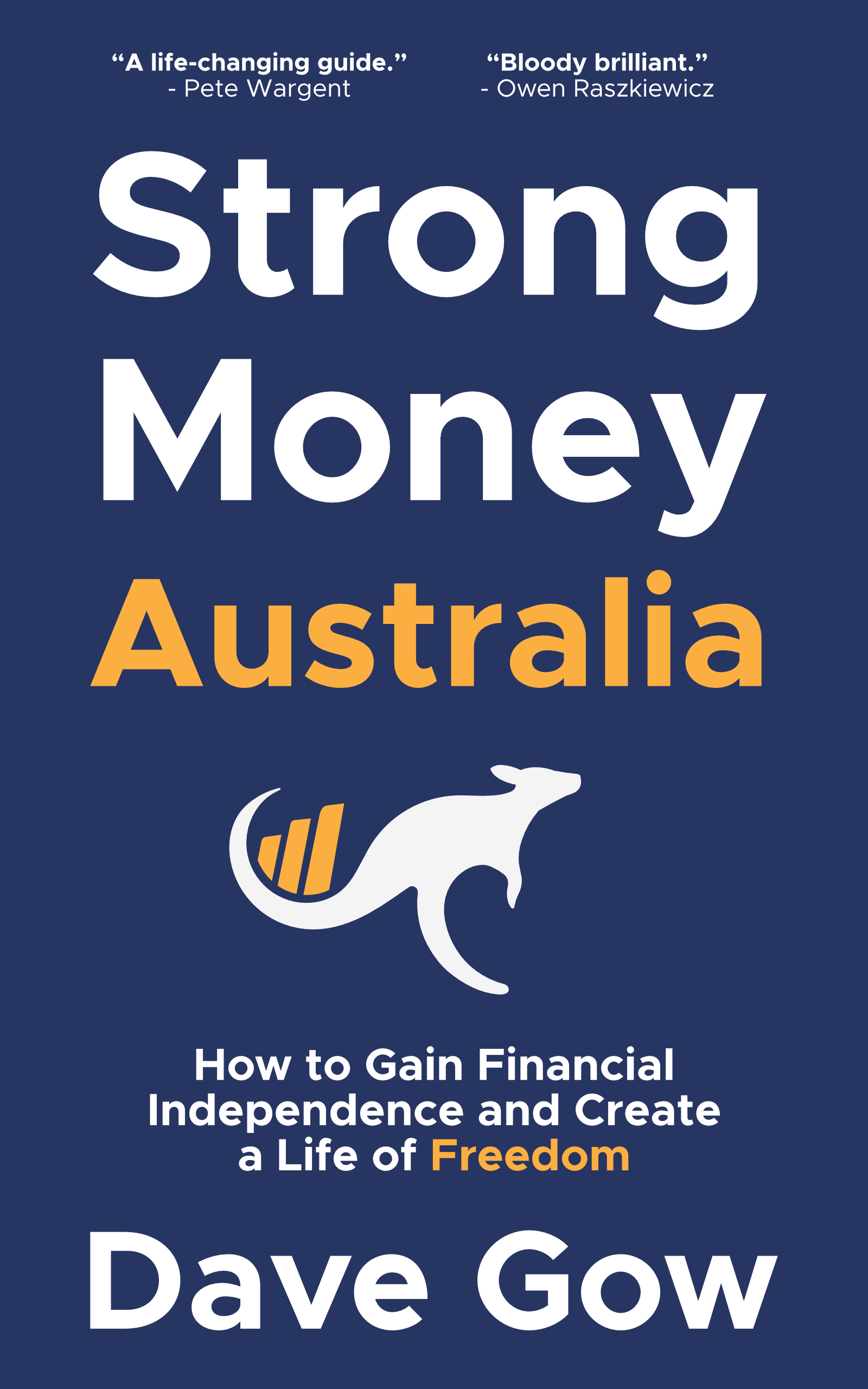
P.S. Each one of these topics is explored in much more detail in my new book ‘You’ve Got Money… Now What?’ Get it on Amazon, Spotify, Audible and Apple.

How to overcome the traps preventing you from claiming your freedom and living your ideal life.
My thoughts on risk and investing after FI. How I define ‘enough’ and follow-up questions on my geared super strategy.

Money, freedom, and a better life - delivered to your inbox
Practical insights to help you build wealth & actually enjoy it.