
Welcome to the second installment of Making Big Money from Little Changes.
The goal with this series is to find all the ways we can make huge financial progress without upending out lives – tackling the biggest potential areas first before moving onto the smaller ones (combining the 8 years or so of blogs into a series of practical ideas).
You can read Part 1 here (from 2017, which I’ve now updated), where we nailed down a few simple tweaks that could net you almost half a million dollars over 20 years. Hopefully you like the concept here, because I plan to roll out a bunch more of these posts over the coming year or so.
Today we’ve got four more areas where you can make a serious improvement in your wealth with a few simple tweaks – we’re talking many hundreds of thousands of dollars.
Let’s dive in!
(By the way, you can listen to the podcast version here)
When people think of creating extra wealth from super, they usually think of tax benefits.
But that’s not what I’m going to talk about today.
The truth is, most Australians are leaving a fortune on the table simply because they’ve never bothered to look at their super options or take an interest.
Here’s the thing: when you start working, you’re typically thrown into your employer’s default super fund. And these default options are usually pretty conservative – they’re designed to make a decent return over time without shooting the lights out.
Most default funds will have you in what’s called a “balanced” option, which typically includes a mix of shares, bonds, property, and cash – sometimes infrastructure and a bit of private equity too.
Sounds reasonable and diversified, right? Yes. The problem is, bonds and cash often end up being about 25% of the fund.
That means a quarter of your money is sitting around sipping tea instead of working as hard as possible.
Now yes, that money will earn returns, but it’ll likely be far lower than what high risk/high growth assets like shares can provide.
The benefit of a balanced fund is that it’s less volatile and doesn’t fall as much during a downturn. That may be great if you’re 60 years old and about to retire. But if you’re in your 20s, 30s, or even 40s, it’s actually costing you a lot in potential missed returns.
If you switch to a high-growth option, you’re typically looking at a fund that’s heavily weighted towards shares – maybe 70-80% – plus some commercial property, infrastructure assets, and other higher-yielding investments.
Often, these are actively managed funds where fund managers are trying to pick winning stocks or assets, which has its own challenges. The good part is there will be very little money locked in low risk low return assets – maybe just 5-10%.
A high growth fund should comfortably outperform the default balanced fund over the long run. But my personal preference is to go with an ‘all shares’ or ‘indexed shares’ option.
Almost all super funds offer these now. These are funds that track the share market indices – like the ASX 200 or international markets.
Which is basically how many of us invest outside super. It’s also possible to choose 100% shares, so there are no bonds or cash dragging down the returns.
The beauty of index funds is they also have much lower fees because there’s no expensive fund manager trying to beat the market. For the purpose of calculation, I’m going to assume high growth super and indexed shares will return the same – because they’re both a level up from the default option.
Say you’ve got $80,000 in your super right now, and you’re adding about $8,000 per year through your employer contributions.
If you’re in a balanced fund earning 7% per year versus switching to a high growth or indexed shares option earning 8% per year, here’s what happens over 20 years:
— The conservative option gets you to $637,000.
— The more aggressive option gets you to $739,000.
That’s $100,000 difference for literally doing nothing except ticking a different option in your online super dashboard.
Where does this 1% return boost come from?
Well, if 25% of the money is earning 4% in low risk investments vs 8% in shares or high growth, that equates to 1% lower returns overall.
The difference could even be higher than this if you have a bigger balance, add more to it, and choose 100% indexed shares, since fees are also usually lower than default funds.
Lower fees + higher returns = massive compound improvement.
Now, if you’re part of a couple and you both make this change, you could double the savings! And remember, this difference will continue compounding for the rest of your working life and beyond – not just for 20 years.
Think about it – most people work for 40 years. Over that timeframe, this one simple change would be worth roughly $1m, or $2m for a couple.
It doesn’t even stop there. You’ll also earn more returns from 65 onwards due to the higher balance… even if you switch it all to cash from that point!
Now you probably don’t want to keep working for 40 years or you wouldn’t be reading this. But it highlights the power that one small decision can make.
The best part is, once you make the switch, you literally never have to think about it again! It’s the ultimate set-and-forget wealth building strategy.
Will there be more ups and downs? Yes. Seeing your super fall more often (and more sharply) is the price you pay for bigger long term rewards.
For this reason, it won’t suit everyone, but in my view, it’s totally worth it for those who recognise the short term movements are meaningless when you have a multi-decade timeframe.
I know, I know – some of you are probably thinking, “here we go, you’re gonna tell me I can’t enjoy my life.”
But hear me out, because as tasty as lunches can be, the numbers might make you feel a bit queasy.
Let’s say you’re someone who buys lunch at work every day.
I’ll assume you’re not going to restaurants for lobster or steak. Maybe you’re grabbing a pie or a sandwich along with a drink for something like $12. Or you’re getting a nice juice and Bahn Mi for $18. Let’s use $15 as our average.
$15 a day, five days a week, 50 weeks a year comes to almost $3,750 per year.
Now, I know you enjoy your lunches, but it might not taste so good when you see the impact it’s having on your finances.
If you invested that $3,750 every year for 20 years at 7% returns, you’d have $153,000. That’s a lot of money for something you probably don’t even really appreciate most of the time.
I’m not suggesting you cut it out entirely. Too much restriction can be frustrating, and you may end up rebelling against it later. So what to do?
What if you just brought lunch from home a little more often each week?
Then you could still enjoy your favourite lunch spot a couple times each week when you really want it, but you get to save some cash too!
Doing this you’d probably save about $1,800 per year by bringing lunch from home 2-3 days a week:
— Over 10 years: $24,000
— Over 20 years: $74,000
That’s a pretty decent chunk of change for making a few snacks at home.
Optimisation is the goal here. You might currently only grab lunch 3 times per week. But if you can get it down to 1 – pick your favourite day – then you’ll still make a sizable difference. As always, the biggest spenders have the most to gain.
There’s also a psychological benefit. When you only buy lunch once or twice a week instead of every day, you actually appreciate it more. It becomes a treat rather than just an automatic habit you get numb to.
By the way, if you’re investing and want a simple way to track your passive dividend income over time, you can get the spreadsheet I use below:
This one blows me away, and it’s something most Aussies don’t speak much about.
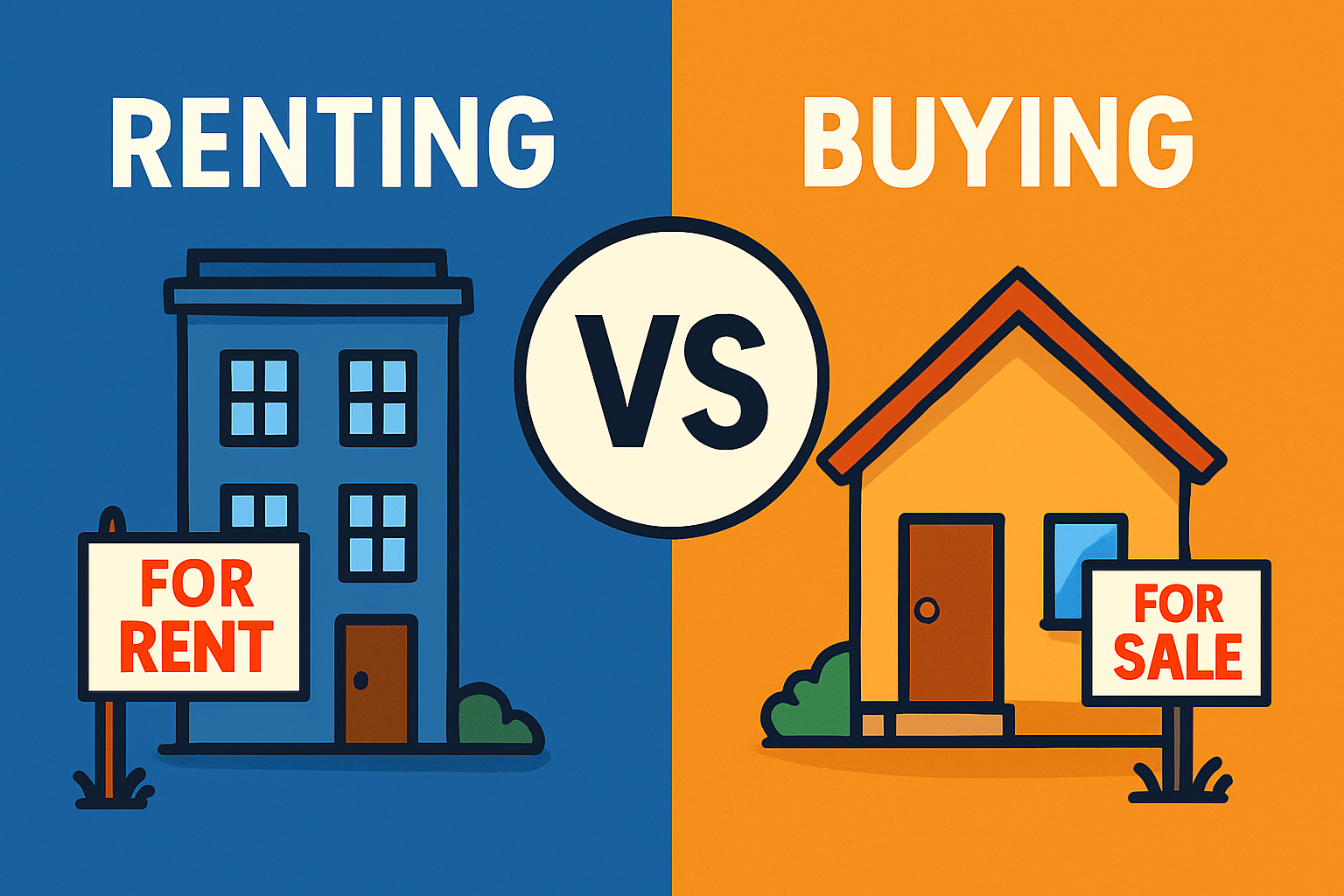
The true cost of moving house as a homeowner.
You’re looking at 2-3% when you sell, then stamp duty of around 5% when you buy – plus other bits and pieces like bank charges, conveyancing, building inspections, and moving costs.
All up, you’re looking at about 7-8% of the property value every time you move. You might think “oh well you make up for that in no time with capital growth,” but let me show you what this means in practice.
Let’s compare two people:
— Person A gets itchy feet and moves home every 5 years.
— Person B stays put for longer periods and only moves every 10 years.
Let’s assume they both start with a $700,000 property. With price growth, let’s say it’s worth $850,000 after 5 years, $1 million after 10 years, and $1.2 million after 15 years.
Person A’s costs:
Moves after 5 years and pays 8% in transaction costs on an $850,000 property – that’s $68,000 down the drain.
They move again after 10 years – that’s $80,000 on their $1 million property. And again after 15 years – that’s $96,000 on a $1.2 million property
Person B’s costs:
They move once after 10 years, paying $80,000 in transaction costs.
Now, here’s where it gets really interesting. Not only has Person A paid an extra $164,000 in transaction costs, but they’ve also had a higher mortgage balance the whole time because of these costs.
That means two things:
1- It takes them much longer to pay off their home.
2- It leaves them with less monthly cashflow to invest.
Over a 20 year period, having itchy feet ends up costing this homeowner a lot more money. But how much exactly?
Assuming a higher mortgage balance due to the costs from moving in year 5 and year 15 (the extra moves Person B didn’t make), the cost of those extra two moves when you assume 5% interest comes to $264,000 over 20 years.
Even if you assume ONLY ONE extra move over 20 years, it’s still going to make a difference of over $100,000. That’s insane!
In fact, the difference might be even higher, because not only does Person B have a lower mortgage and pay less interest, but they also have more cash to invest.
Nobody thinks about these costs because they aren’t front of mind. You sell the house, there’s a bunch of paperwork, and you end up with a different house and a different mortgage. Often the new home costs more so you don’t think anything of the mortgage being higher.
And guess what? If property growth is higher, it’s even worse, since your buying/selling costs are based on the value!
A quarter of a million for what?
Look, I get it – sometimes you genuinely need to move. Maybe you’ve got kids and need more space, or you’ve got a job opportunity somewhere else. But too many people move just because they want a change.
Or they think there’s some opportunity elsewhere. They want to build a new home, get FOMO about a specific area, thinking, “If we don’t buy now we might never be able to!”
But this is typically not something to worry about if you’re decent with money. This type of thinking is simply a way we try and justify what we want. Which is fine… but do it with your eyes wide open and knowing the full cost.
Here’s my advice: if you buy a home, don’t move unless you really need to. Stay there as long as possible. If you’re getting bored with your place, renovate instead if you can. The moving costs alone could pay for a pretty decent renovation that could make you love your home again.
The last strategy is about your income – specifically, the power of strategic job switching.
Now, this is probably the most variable of all our examples because it depends on your industry, skills, experience, and maybe even how good you are at negotiating.
But the reality is, and I’m sure you’ve noticed this, employers generally don’t really reward loyalty the way we hope. In fact, staying with the same employer for too long can actually hurt your earning potential.
Why? Because companies often have pretty fixed salary structures in place. You might get a 3-5% increase each year if you’re lucky, and maybe a bigger boost if you get promoted. But when you switch jobs, you might be able to get a 10-20% increase.
The reality is different employers and companies pay different amounts for the same job and skillset.
There’s also value in having worked for different companies. You end up getting exposure to different systems, different business types, different ways of doing things, different skills, and even different networks.
Many employers actually see this as a positive. So just like you shop around for the best deal on your insurance, or your mortgage like we covered last time, why not shop around for the best employer?
Say you’re currently earning $80,000 per year.
If you were able to find an employer who paid better, and were willing to job-hop every few years, picking up a few skills along the way, it’s highly possible to end up earning $15k more after 10 years (in today’s terms).
To run the numbers, let’s assume you’re able to increase your income by $5k after tax immediately by switching to a better employer. Then after 5 years, you can do it again. So you’ll be $10k per year better off after tax than if you stayed loyal and did nothing.
From the 10 year mark, you then just cruise along for the next 10 years. We’ll be conservative and assume that’s the best you can do (unlikely).
How do the numbers look? Assuming you invest the surplus of course!
Conservative scenario: If you earn 7% returns, you’d be almost $100k better off after 10 years, and about $192,000 wealthier after 20 years.
Better scenario: Let’s say you can do a little better. If you’re a job-hopper who picks up more skills and out-earns a loyal employee by at least $7,500 per year rather than $5,000… after 20 years you’ll have an extra $307,000.
Even if you only manage a fraction of that, it’s still a huge sum of money. And to be fair, I’ve heard from several people who’ve managed far bigger amounts than this!
Some of you could do double that, which means double the outcome! And if you’re a two-income couple, you can even double it again!
Now there are some exceptions and caveats like with everything, and it may not apply to your specific scenario. For example, job hopping every 12 months can make you look flaky.
And it’s worth noting that your current employer may be willing to boost your pay if you’ve received a higher offer elsewhere. So unless you want to leave your employer for other reasons, don’t be afraid to let them know the situation.
You also need to actually be decent at what you do. And you need to be prepared to negotiate with both your prospective and current employers and risk being rejected.
While moving employers might seem like a pretty bland idea, for many people, across several industries, strategic job switching is one of the most powerful wealth-boosting strategies there is.
What we’re doing in this series is stacking savings ideas on top of one another.
One decision at a time, optimising the long term outcome, without doing anything drastic or undergoing massive sacrifice.
I’m going to create a huge list of potential savings ideas, all with large five-or-six-figure benefits, then you can pick and choose which ones to apply.
So, over a 20-year period, what are these four strategies worth?
Aggressive super: $102,000 extra (or $200,000 for a couple)
Work lunch optimisation: $74,000
Reducing house moves: $264,000
Strategic job switching: $192,000 / $300,000 (depending on the example)
That’s over $600,000 for a single, and potentially more than a million dollars for a couple.
Even if you cut those numbers to a 10 year period, we’re still talking huge sums of money.
And remember, none of these are outlandish ideas. I hope you can appreciate just how simple this all is. Combined with the strategies from part one, our list of strategies so far is worth well over $1m, and we’re just getting warmed up.
Many people will never implement even one of these strategies, let alone all of them.
They’ll stick with their default super fund, buy lunch every day, move house without running the numbers, and stay loyal to employers who don’t reward loyalty, just because it’s the easiest choice.
But if you’re reading this, I’m betting you’re someone who’s willing to make a few small changes now to create a massively better outcome.
So here’s my challenge to you: commit to executing just one of the strategies we’ve talked about. No need to try and implement everything right now – that’s a recipe for overwhelm and failure.
Just pick one thing, get it sorted, and then move on to the next. Your future self will thank you for it.
The brutal reality is that most people are financially average because they make average decisions. There’s a huge opportunity to be different, and that’s what I want you to focus on.
Many people will read these ideas and think “Yeah, that makes sense, I should do that”… and then do absolutely nothing different! But compound interest doesn’t care about good intentions – it only rewards action.
📘 My Book
Your complete guide financial independence in Australia. Available on Amazon, Audible and Spotify.
🏡 Mortgage Broker
Deanna and her team have helped me and many readers with home loan strategies over the years (including debt recycling). Check them out.
💼 Financial Advice
For those wanting personalised guidance with strategy, super, tax, or retirement, I can connect you with someone I trust. Find out more.
If you use the above services, this blog may receive a benefit at no extra cost to you. I only recommend things I use myself and genuinely believe in – thanks if you choose to check them out.

How to overcome the traps preventing you from claiming your freedom and living your ideal life.
My thoughts on risk and investing after FI. How I define ‘enough’ and follow-up questions on my geared super strategy.


Money, freedom, and a better life - delivered to your inbox
Practical insights to help you build wealth & actually enjoy it.




















Great article – so many optimisations.
Re jumping ship (changing jobs) can I offer an alternate perspective. Yes, it can get you a higher salary quicker, and to be fair unless one has a crystal ball it’s virtually impossible to know if staying put or jumping ship will be better in the long run.
I’ve been with the same employer since graduating from uni – so coming up for 15 years. Company is a big WA household name. At about the 5-8 year mark I seriously investigated jumping ship. Didn’t for various reasons.
I’ve since received multiple promos, and had great job security. I compare my salary and experience to ex colleagues who did jump ship at the 5-8 year mark. Can confidently say none have my salary or skill set or employability. It could look very different today however due to factors beyond my control – eg if the company had been bought out.
I now have a young family and tonnes of annual and LSL. In a few years I plan to take all my LSL half pay – it’ll be 8+ months off. If I had jumped ship a few times, that option wouldn’t be on the table. Also got 2 x parental leave. While jumping ship all those years ago looked super attractive at the time, I’m really glad I stuck it out.
Hey Anne, thanks for sharing. That’s a fantastic outcome! It’s definitely worth seeing if it’s possible to achieve the same thing with an existing company, for sure.
Hello ,
Another masterpiece!! …
“ …compound interest doesn’t care about good intentions…it only rewards action !! “
This has to be the quote of the century!!
Thankyou Dave 👍
Cheers
Take care
Thanks very much mate! Hopefully the series can become super helpful as I build it out, combining all our favourite tweaks and savings ideas since the birth of this blog (and others I haven’t got to yet).
Appreciate your support as always Jimmy 🙂
The best thing I ever did was dump bonds from my super. Went all international shares in 2018 (and invest in Aussie shares outside super for simplicity) and have never regretted it — even in the COVID and Trump downturns. Took 5 minutes to sort it. Best return on investment of time I’ll ever have.
Thanks for sharing mate. Makes a lot of sense, especially when there’s a constant stream of new money being added automatically! The long term outcome is massive, far better than I’ve painted here as the example.
I think a lot of people don’t even realise that they’re investing into a balanced super fund.
This leaves so much untapped potential for much higher returns. Especially if you’re in your teens or 20s, the compounding effects will be massive.
Changing to a full index fund option is literally the easiest, one-time change you can make that results in $100,000s in extra wealth.
I agree – most people just have it on set and forget and just hope/assume it’s being invested suitably for their 40 year working lives. It could literally mean $1m over a working life, for the sake of a few button clicks.
Another great article Dave. Love your work!
What super do you use?
I’m 30, and my partner and I moved to Hostplus because low it’s high growth with low fees. Would you recommend a better one?
Thanks Jay!
I’m currently with ART (Australian Retirement Trust), using their indexed shares options. I may be changing it soon and will do an article on it if/when I do explaining why. All the industry funds are fairly similar – ART, Hostplus, REST, etc – it’s just about finding ones with low fees and then opting for high growth or preferably all-shares as stated in the article/pod.