Close Menu

OVER 10000+ READERS

Creating Freedom Through Financial Independence

Article

Making Big Money from Little Changes

May 4, 2017


Original article: 2017.  Updated: 2025.


Retiring early is a simple concept.

It comes from spending less than you earn and investing your savings to create wealth and passive income you can eventually live on.  The more you save and invest, the earlier you can retire.

There’s an endless number of savings ideas and financial tweaks we can discuss to make that happen.  So maybe we’ll turn this into an ongoing series!

But the idea here is to show you just how much of an impact you can have with relatively small changes.  In how you run your finances and your life in general.

Too many people think there’s no point investing or making small changes because they think it’ll only have a small impact. Absolutely false.  When you actually run the numbers, it highlights the sheer power of compound interest and how easy it is to multiply your money over time.

Let’s look at a few simple ways to get the magical compounding working for you straight away with just some simple tweaks.

These ideas will probably be well-known to some of my long-time followers. But hopefully you don’t mind me revisiting these points to serve as both a helpful reminder of what you’re doing and why, but also as inspiration for the newer folks that have joined us more recently.


Why most people stay broke

I think when most people think of saving, their eyes glaze over and their bottom lip starts to quiver. They become frightened, assuming it means they’ll live a miserable life.

The reality is, we’ve become so accustomed to spending ALL our money, that it’s just normal to be broke. But why have we come to accept this as the norm, when it’s completely optional in most cases?

It amazes me that people who aren’t in a great financial position are ALSO the same ones that are reluctant to make any changes. It’s not like their current strategy is working very well!

But I’m going to assume you’re not like that.  I’m going to assume you’re open to making a few changes to create a far better situation for yourself.  And that you’d rather approach your finances from a position of strength, not fear or avoidance.

Eventually, your future self will be able to appreciate the decisions you made now, and for building the financial fortress that allows you to live so freely.


The long term perspective

A good wake-up call is looking at how things cost over a longer period of time. We touched on this in The Art of Making Smart Money Decisions.

This can definitely boost your motivation when you see how much wealth you’re really missing out on.

So let’s run through a few ideas, and I’ll show you the difference it can make over time.  And again, these aren’t going to be earth-shattering ideas!  But stacking a whole bunch of these together definitely has the potential to change your life.

The amazing part is, compound interest actually accelerates the gains over time, so the longer term outcomes are going to be far greater than what I show you here.

I might throw in a few longer term examples as we go along, just to highlight the power of all this.


The $70 meal that costs $150,000

Imagine a couple who likes going out to dinner.

Let’s assume a couple goes out to dinner twice a week. They’ll probably spend $70 a pop for a decent restaurant meal with a drink or dessert each, or $140 a week. (I’ve known singles who spend FAR more than this, but let’s be conservative.)

If they decide to go out for dinner once a week instead of twice, they don’t actually miss out (wouldn’t want that, would we!).

Let’s say they decide to COOK one of their favourite dishes at home each week, maybe something they hadn’t tried before. Now they’re not only saving money, but actually learning something and maybe even having a bit of fun doing it!

What happens to this little $70 weekly expense over a decade if they invest the money instead?

If the investment is earning 7% per year, any compound interest calculator splits out a total of about $50,000.  In 20 years, it’s $150,000!

That’s a ton of money for one extra dinner… so unless you’re already wealthy, is Once vs Twice a week really worth that much?

Notice how I’m not suggesting to cut it out.  Obviously if you cut it out entirely, it becomes $300k.  But I’m taking a more reasonable middle ground of just tweaking things so you can get the best of both worlds.

Side note: Most of our enjoyment will come from that first dinner out anyway… the second one won’t be quite as exciting or novel.  So in this way, you maximise the benefit while controlling the cost.  That’s my philosophy with a lot of things.


The simple car strategies most people ignore

Another big potential area for greater wealth without really doing much is Cars.

And by the way, that will be a theme in this ‘Big Money, Little Changes’ series – savings ideas where you don’t actually have to do much. That’s for two reasons:

— Because I’m actually pretty lazy
— Because many of the biggest gains are simple

So don’t worry, I won’t be discussing why you should learn to make your own soap, or how to use both sides of toilet paper.  The changes I’ll suggest will be pretty straightforward.  Feel free to pick and choose what suits you.

Some of you will inevitably want to keep certain parts of your spending as is, because it’s something you value. I have absolutely no issue with that – as long as you can figure out other areas to save instead.

OK, so what’s this simple car saving strategy? It’s actually something I think most people never even think about.


Car loans are the new mortgage

The most obvious financial trap when it comes to cars is taking on loans to buy them. This isn’t the strategy, but I do want to touch on it briefly.

It’s very common for Aussies, especially those under 40, to purchase new and often expensive vehicles – and this is a complete trap.

Here’s how the cycle works:

— Buy a car for $40k with a loan
— After 5 years, you’ve paid $50-60k total
— Car is now worth $25k (maybe less)
— You’re bored and want something newer and more expensive
— Take out a bigger loan and the cycle starts over

So, every 5 years, they’re essentially burning $30k of value with what they’ve paid VS what the car is worth. Making it worse, the ongoing payment prevents them from being able to save!

If you are just getting started and you do have a car loan, get rid of it as soon as possible. Imagine being able to invest that $500/month instead!

And that’s actually the hidden cost I want to share, and where there are big savings to be had.  Not so much the depreciation of the car… but what you could have done with the money instead.


The massive opportunity cost of car ownership

Let’s forget car loans for a minute. We’ll assume you and your friend are both shopping for a car.

You both have $50k saved up and you’re shopping for a car.

The scenario:

— You decide that a $20k car is enough for your needs (decent but not fancy)
— Your friend is flashier and spends the whole $50k
— You invest your remaining $30k

The wealth impact:

— After 10 years (7% returns): Your $30k becomes $60k
— After 20 years: Your $30k becomes $120k

But it’s actually better than that, because this benefit would accrue every time you make a more sensible car choice.

So if this decision was made twice in a 20 year period, it would be worth closer to a quarter of a million dollars.


The million dollar reality

I know you’re probably thinking, who actually pays $50k cash for a car. That’s absolutely true, very few people. They get it on loan which as we’ve discussed is way worse!

Just out of curiosity, I did the sums on this simple car choice over a regular 40 year working career.  Turns out, if you spend $30k less every 10 years, or $3k less per year – which isn’t very much when you think about it – it ends up compounding to over one million dollars!

Remember in a previous article we talked about keeping your purchases modest in proportion to your wealth?  

For cars, the person with $100k to their name buying a $50k car is HALF their net worth wrapped up in a consumer good.  That’s not good for a whole host of reasons.  For a person with $1m, it’s only 5% of their wealth… maybe still not a great financial choice, but way less of an issue.


A personal story about priorities

Now, you can make fun of me because I bought a new car last year.  So my message looks inconsistent.  But remember, I did this AFTER reaching FI and in a position where it didn’t affect my freedom and force me to work longer for the sake of a car.

I’ve essentially just used some of the surplus from continuing to earn some income while not really needing to.  And that’s the important part. I bought my freedom before I bought anything fancy.  Just because you forgo a few luxuries now, doesn’t mean you can never have them.

A long time ago, I remember being asked about my car by someone at work who knew that I had a few properties. They asked “Dave, you’ve got investments, why don’t you buy a new car.” At the time, I had an old hail-damaged Holden worth about $2k. I said, “The reason I have investments is because I haven’t bought a new car. Besides, I don’t need one.”

I’m not sure if he got it, but that was the most accurate answer I could give. It points to the tradeoffs involved, and what my priorities were.


Mortgage rates

This is something many people talk about, but a lot of folks put it in the too hard or can’t be bothered basket. That is, making sure you’ve got a good mortgage rate (assuming you have a home loan).

I think the reason this one is underappreciated is because it does take a little bit of effort. Plus we think all banks are out to shaft us, so there’s no point switching banks and they probably aren’t going to give us a discount anyway.

Besides, what difference is it gonna make?

Well, in a report in 2020, the ACCC found some shocking statistics:

Borrowers with loans 3-5 years old: Paid on average 0.58% more than new loans. Borrowers with loans 10+ years old: Paid over 1% more than new loans

Now, for our purposes, we’ll use the lesser of those examples. Paying an extra 0.58% on a loan of $500,000 equates to $2,900 in a single year. How insane is that!!!

This will be no surprise to many of you – we’re all starting to realise that loyalty doesn’t pay when it comes to banks, insurers, telcos – in fact, most companies.

To make sure you’re not getting shafted, you need to always be checking whether you’re currently getting a good deal or not.  In most cases, new customers get a better deal than old customers do. NO MATTER HOW LONG YOU’VE BEEN WITH THEM.

They simply don’t care – they see you as a lazy and ‘captive’ customer.  It’s in their best interest to charge you as much as they can get away with. That’s just the reality of it.

So how do we get a better rate?


How to get a better rate

There’s a few ways.  I like to do some research and tackle it in a prepared way, but you could equally just ring up your current lender and ask if they can do any better on that loan since you’re shopping around.

My preferred approach:

— Check your current bank’s website for new customer rates
— Google around to see what other lenders are offering
— Call armed with this information (often more than bank staff know!)

Almost every time this approach has resulted in a lower rate.

If you use a mortgage broker, it’s even less effort again. They’ll often be able to go to your bank and negotiate for better pricing, or they’ll tell you what other lenders are willing to offer you based on your situation.

However you do it, given the sums involved, it pays to stay on top of your mortgage, since even a tiny percentage saving can make a pretty big difference.


When to switch vs stay

If your current bank simply isn’t willing to budge at all – which is quite rare – then it could make sense to refinance if there’s a decent saving to be had.

Keep in mind, it may not make sense to switch lenders for a few reasons:

— Some may not allow offset accounts
— Annual fees may apply
— There’s the actual hassle of switching

So quite often the best return on effort is simply staying with your current bank and just making sure your rate is somewhere close to the better ones on offer.

By the way, it’s totally fair to ask for a lower rate because your loan gets less risky over time. Your loan to value ratio goes down as you pay the loan off and your property grows in value.  This by itself sometimes qualifies you for a lower rate – and it doesn’t matter whether it’s your own home or an investment property.


The wealth impact of lower rates

Let’s assume you manage to get a 0.5% rate reduction.

The personal finance enthusiasts are likely already on top of this, so they won’t be able to achieve such a difference.  But for someone who’s new to the optimisation game, you definitely could!  Remember what the ACCC found?

The numbers:

— 0.5% saving on $500,000 mortgage = $2,500 in first year
— Average annual saving over 10 years = $2,000 (as loan balance decreases)
— 10-year wealth impact: $27,000
— 20-year wealth impact: $82,000

That’s a lot of cash for not a lot of effort.  Possibly the best return on your time you’ll ever make.


Final thoughts

I could compound these choices over a typical 40 year career to make it sound even better.  But given our focus is making work optional far earlier than that, we’ll stick with the 10 and 20 year examples.

I hope it’s clear just how much impact a few small tweaks in your finances can make. The difference between becoming wealthy and independent or just being another wage slave is about the choices we make and how we run our lives.

These simple examples, when combined over a 20 year period, are worth close to half a million dollars versus the average person – for basically nothing:

Eating out once less per week. Having a slightly less nice car. And nailing down a good mortgage rate.

Think of how much of an impact that can have on your life, for very little effort. And we’re just getting started on ways you can optimise your finances. We’ll explore other ideas in future articles in this series.

I hope you can see how stacking up savings like this, one on top of the other, goes a very long way to creating financial independence. If you start implementing small changes now, you’ll be amazed at where you’ll be in a few years.

But since everyone seems to underappreciate how powerful changes like this are, the benefits will only accrue to a small percentage of people… and hopefully… you’re one of them.

Remember, if you’re doing the opposite of everyone else, usually you’re onto something!


Here are some resources you might find helpful:

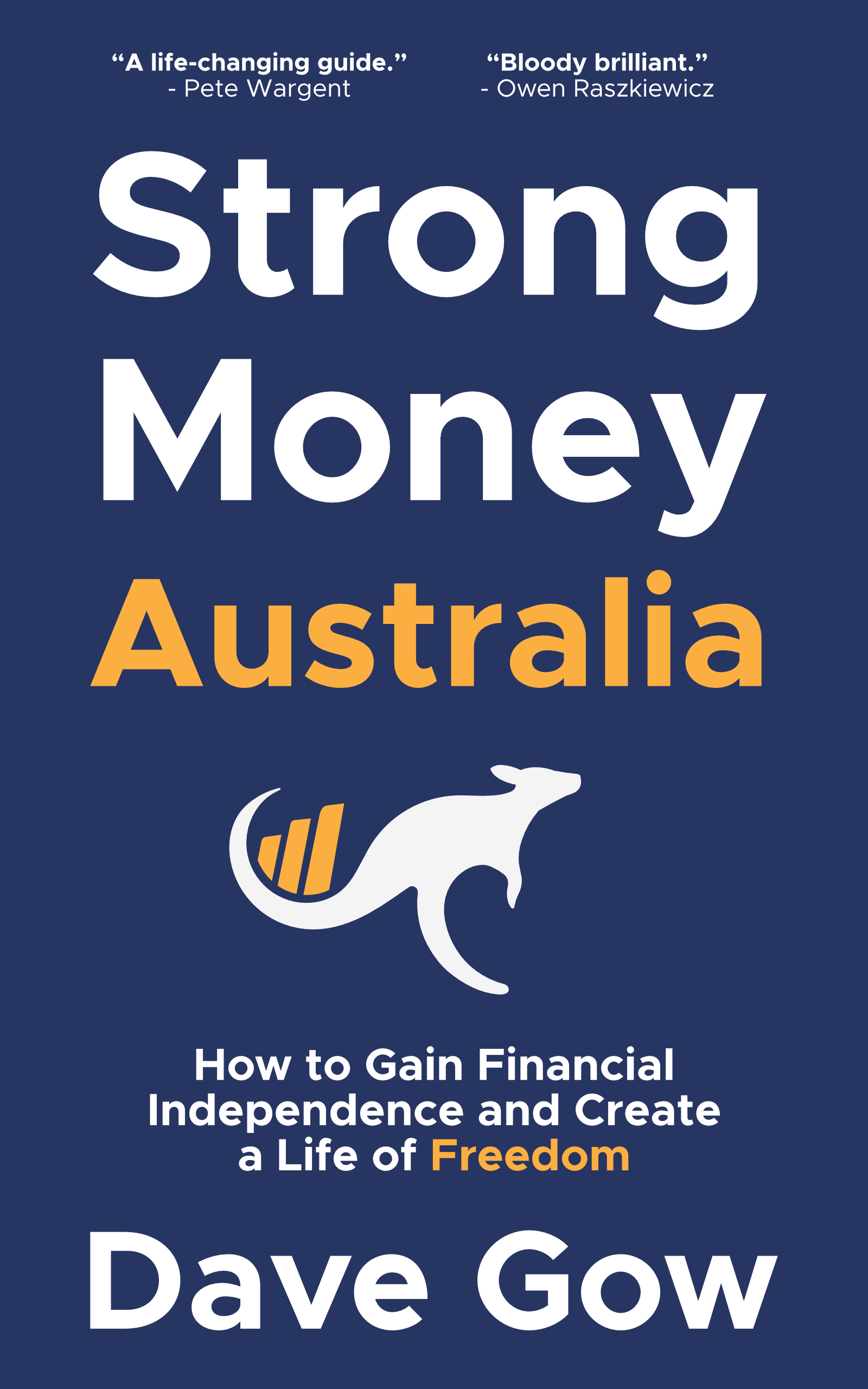
📘 My Book
The most complete and actionable guide to financial independence in Australia. Available on Amazon, Audible and Spotify.

🏡 Mortgage Broker
Deanna and her team have helped me and many readers with home loan strategies over the years. Check them out.

💼 Financial Advice
For those wanting expert guidance on big life and money decisions, I can connect you with someone I trust. Find out more.

Some links may benefit this blog at no extra cost to you. I only recommend things I use myself and genuinely believe in – thanks if you choose to check them out.


4 Comments

4 Replies to “Making Big Money from Little Changes”

  1. I’d suggest taking some pointers from Mr Money Moustache with regard to car usage as well. Your tips are certainly along those lines.

    1. For sure. People should definitely read MMM. I haven’t written about specifics yet, but cars are a big area of waste!

Leave a Reply

Your email address will not be published. Required fields are marked *

See All

Download the Free Guide

10 Steps to Financial Independence