
Welcome back to our series “Making Big Money from Little Changes.”
If you missed parts one and two, check them out here: Part 1. Part 2.
They’re both available in podcast form too (links on those pages)
In those two, we’ve already covered strategies that could net you well over a million dollars in 20 years just by making a few smart tweaks to your finances and lifestyle.
The goal with this series is to give you a list of strategies to amass a life changing amount of money. My idea is you can pick and choose which ones you like the most – or which are the most practical for your situation.
I can see this series getting to at least 10 episodes, maybe even 15 or 20. But we’ll tackle the biggest savings first before moving on to the rest. Many of these will be familiar to long time followers, but it’s important to revisit the classic principles and lay out exactly how it’s done for newbies.
If you’re new to my content, these are simple, actionable strategies you can use to easily end up with one or two million dollars over the next 10 or 20 years.
Today we’re gonna look at an investment tweak, a housing optimisation, a simple income boost, and a travel hack – which will all add up to almost a million bucks.
Let’s dive in with the first one – and that is getting more aggressive with your savings.
(By the way, you can listen to the podcast version here)
This one is for the homeowners out there – including if you plan to buy in the future.
Prioritising investing over paying off debt could be worth hundreds of thousands of dollars, but many homeowners never even consider it. Now, before you start yelling at me about the guaranteed returns from paying off your mortgage, just hear me out.
Most financially savvy Aussies with a mortgage have an obsession with paying it off as quickly as possible. I get it – there’s something psychological about owning your home outright. It feels satisfying and comforting, and it’s often recommended as the smartest financial move you can make.
But let’s talk about what if you approached it differently.
Let’s say you’ve got a mortgage at 5% interest, and you’re putting an extra $30,000 per year towards paying it down faster. You feel great about saving 5% in interest costs, which is basically a guaranteed return (as long as the rate stays at 5%).
Side note that almost everybody gets wrong: if rates fall lower, your previous extra payments and having lower debt are no longer saving you as much. So it’s not quite that ‘locked in’ level of guaranteed return you expect, but it will always be positive which is the main appeal.
That same $30,000 invested elsewhere could reasonably earn you 8% per year over the long term. Yes this fluctuates, and it’s also taxable. But thanks to franking credits on Australian dividends and the fact that capital gains are only taxed when you sell, the tax impact is often much less than people think (perhaps 1% per year or less).
So instead of saving 5% by paying down debt, you could be earning 7% after tax by investing. That’s a 2% difference, which might not sound like much, but compounding turns that into serious money.
In fact, by doing this you end up with close to an extra $40,000 in 10 years, and a whopping $237,000 in extra wealth over 20 years.
That’s a quarter of a million dollars for literally just directing your money to a different place.
That’s probably true – but many people with means will upgrade during a 20 year period as well. And even still, being debt-free is simply saving you interest over the same period – for the rest of your life in fact. So I’ve assumed the debt is ongoing so you can see the cumulative effect and the potential usefulness of keeping debt and investing instead.
There’s also another angle. If you switch to an interest-only loan, you free up even more cash each month to invest – potentially another $5,000 or $10,000 per year depending on your mortgage size and loan term.
That money also compounds at a higher rate – equating to an additional $55,000 of gains over 20 years.
You may pay a slightly higher rate for an interest-only loan (IO), but not always. In fact, I just refinanced my three loans all to IO and the rate was better than I was paying for P&I!
To be fair, this one will best suit the number nerds, who just want to optimise everything. But I do think it’s worth understanding for anyone with a mortgage.
You can still pay off your mortgage over time, and you still have the option of cashing out some of your investments to end up debt free later. You just have a larger pool of wealth to play with. And of course there are timeframes and scenarios where the mortgage can be more profitable than investing – but for the most part, investing tends to win.
It’s worth remembering that even though your mortgage feels expensive at the start, it will actually get cheaper over time – as your income steadily rises and your investments grow. In 10 years, your current mortgage payment will feel much more affordable while your portfolio keeps climbing.
There are strong arguments in favour of paying off your home – which I’ve written about in the past a few times, like here and here. We’ll save that discussion for another day – this one is purely about the numbers.
So, if having debt doesn’t bother you, you can get a nice wealth-boost from investing rather than paying down your mortgage. And the longer the time period, the more the benefit stacks up. In fact, that’s what we’re doing, as I wrote about here.
For many of us, travel is one of our biggest optional expenses.
Now, I’m not going to tell you to stop travelling. But I’ll show you how a simple rotation strategy could save a lot of money while still letting you explore new places and enjoy your time away from work.
Let’s assume a household spends $10,000 per year on nice overseas holidays. Some people will spend more than that, and others less – as always, the principle matters more than the specifics.
Here’s what most people do: they take the same type of expensive overseas trip every single year because that’s what they’re used to. And that’s what they think holidays should look like.
Before you panic, I’m not gonna suggest you drive to a park and sleep in the car, or lug your family to a hostel for a week. But what if this hypothetical household put their optimisation hats on?
Instead of the $10,000 overseas trip, let’s say they mix it up. Over three years they do the following:
— One fancy overseas trip costing $10,000
— One local trip costing $3,000
— One year where they take a bunch of time off work for extra long weekends and local adventures – spending maybe $2,000 on special days out and the odd night or two in a nice hotel.
So… instead of spending $10,000 per year on holidays, the annual cost actually falls to $5,000 – a difference of $5,000 per year.
Invested at 8% returns, this makes you $69,000 richer in 10 years and $205,000 richer over 20 years.
But it gets better – thanks to the lower spending, you now need $125,000 less in investments to retire, because your annual expenses are lower. So we’re talking close to $400,000 in total benefit from this one change.
And you could hardly argue this household is in deprivation. They’ve simply modified their approach to have greater variation, more quality free time at home, and some local adventures. Plus, they’ll appreciate the big overseas trips more because they’re not doing them every single year.
The psychology here matters too – when something becomes routine, it stops being as special. By rotating your travel approach, each type of holiday becomes more novel.
Question: how many bedrooms in your home are you actually using versus how many you have?
I mean really using – not just as a bit of storage or “guest bedrooms” that see a visitor maybe once or twice a year.
According to the Australian Bureau of Statistics, three million households have one spare bedroom, and another three million have two or more spare bedrooms. That means most of us are paying for space we don’t actually need.
The crazy part (and I wrote about this in my book) is that for decades now, property sizes have been increasing even as people per household goes down. Four bedroom homes are now vastly more common and usually preferred even though there are now often just two people living in them.
While it’s nice to have space, this comes at a cost.
Every extra bedroom you’re paying for typically costs you at least $100,000 when you buy, often more depending on the area.
And here’s the thing – that extra $100,000 means about $7,000 per year in extra mortgage costs that you could otherwise be investing (ignoring higher stamp duty, maintenance etc).
Over 20 years, investing that $7,000 at 7% returns would leave you with an extra $287,000 of investments.
But wait – some of that mortgage payment becomes equity in your home. And won’t you miss out on capital growth on the more expensive property?
Sure, but how exactly is that helping you retire? If it’s your family home that you’re planning to stay in – which it usually is – that capital growth is just spreadsheet wealth. It’s not usable money, it’s not generating income, and it’s not bringing your FI date any closer.
In fact, it’s doing the opposite – it’s forcing you to service a bigger mortgage, leaving you with less money to invest in assets that can cover your other bills.
All throughout your journey it leaves you with higher expenses, less savings, and less flexibility over your situation – so it’s also having a non-monetary impact too. And yes there might be a small satisfaction / lifestyle element, but we’re talking numbers today!
Well, we can apply this to renters too – the math just works a little differently. The spread between a 2 vs 3 bedroom place, and a 3 vs 4 bedroom place is often around $50-$100 per week. Let’s take the middle ground at $75. I know it varies, but I have to pick a number.
Side note: the opposite side of this is if you can find an interesting quirk in the market where you can rent a bigger place for not much more – then you can LOWER your housing cost by having a housemate or sharing with a friend.
Anyway, for the extra bedroom as a renter we’re typically talking thousands of dollars per year. In fact, that saving becomes $56,000 over 10 years, and $169,000 over 20 years, assuming 7% returns.
So, if you can minimise your possessions and adjust your mind to the point where you don’t need that extra room, it can make a big difference.
It’s common to keep that extra room for guests who stay a few days once or twice a year. But you could literally take your guest and stay in a hotel or Airbnb – treat it like a mini holiday together – and STILL come out ahead. Obviously the details vary but that’s a definite possibility.
This is where the idea of minimalism becomes incredibly valuable. The less stuff you have, the less space you need, the less you pay for housing, and the more money you have for investments that can actually create freedom.
I know it sounds boring compared to getting the biggest and best home you can afford, but boring strategies often work better than exciting ones.
OK, onto our final tweak for this instalment.
Probably the simplest strategy in this entire series, and also the most guaranteed to work. I’m talking about working a few extra hours each week.
Now, before you roll your eyes and think this is too obvious, let me show you the numbers, because they’re pretty compelling.
The median hourly rate for full-time workers in Australia is around $40 as I write this. Let’s assume you can pick up three hours of extra work at this rate. After losing say a third to tax, that’s roughly $80 extra per week, or about $4,000 per year.
Now, that’s not earth-shattering money. But again, here’s where compound interest works its magic…
If you invest that extra $4,000 every year at 7% returns, after 10 years you’ve got an extra $55,000. After 20 years, it’s $164,000.
And this assumes you’re just getting paid a standard rate for the extra hours.
If you’re getting overtime rates – say time-and-a-half, or you work 4-5 hours instead of 3 – then you net an extra $120 per week – which I actually think is very doable.
At that point, you’re looking at $245,000 over 20 years. And that’s just for one person. For a couple, you’re looking at roughly half a million bucks!
What I like best about this strategy is not only is it simple, but it’s completely within your control. You just need to work a few more hours – and you’re already at work each day anyway. It works out to like half an hour per day.
Now, if your current job doesn’t offer overtime, maybe that’s a factor when you’re looking for your next role. Or maybe you pick up some casual work on weekends, or just one evening per week. The point is, it’s one of the most straightforward ways to pile up extra money that exists.
This is exactly what I did in my warehouse job. I’d often stay back for an extra 2 hours on a shift at work. And while each bit of overtime didn’t feel like much at the time, it made a massive difference to how much I could save and invest.
I managed to boost my income by about $15,000 per year just from working more hours – and it was totally worth it. So, I think my example of an extra $80-$120 per week is extremely conservative.
And let’s be honest – most people burn through 30 hours per week just playing on their phone and streaming shows! Activities that don’t improve our lives in any meaningful way. So doing a little extra work with just 10% of those hours to change your financial future is a pretty damn good tradeoff!
What we’re doing in this series is essentially stacking savings ideas on top of one another. One decision at a time, optimising the long term outcome, without doing anything drastic or undergoing massive sacrifice.
And again, the point isn’t that you need to do all of these things. It’s to get you thinking, and give you a huge selection to choose from.
Let’s add up the potential benefit from today’s ideas. Over 20-years, the four strategies we outlined are worth…
— Investing instead paying down mortgage debt: $237,000
— The travel rotation approach: $205,000
— Downsizing by one bedroom: $287,000 (owner), and $169,000 (renter)
— Working three extra hours per week: $164,000 (or $245,000 at the higher amount, and for a couple it was $328,000 or $490,000)
That’s a grand total of between $767,000 at the low end and $1.2m at the upper end. Even if you only half-arse it, you’re still getting close to half a million dollars in benefits.
Combined with the strategies from Part One and Two, our list is now worth well over $2 million. That’s enough to completely alter your life trajectory.
What I love about this stuff is how simple it is. Yet it’s amazing how few people appreciate the power in it.
To me, this is basic optimisation. Taking a little more risk, being a bit more thoughtful with spending, working a tiny bit extra, and not buying more house than you need.
The gap between optimising vs the default approach is small at first. It seems like a bit of hassle and work and hardship.
The truth is, it does take some time for these things to have an impact. But when they do, and each of the strategies begins paying off, the difference becomes impossible to ignore. Until one day, you look around and you realise you’re sitting on a pile of life-changing money.
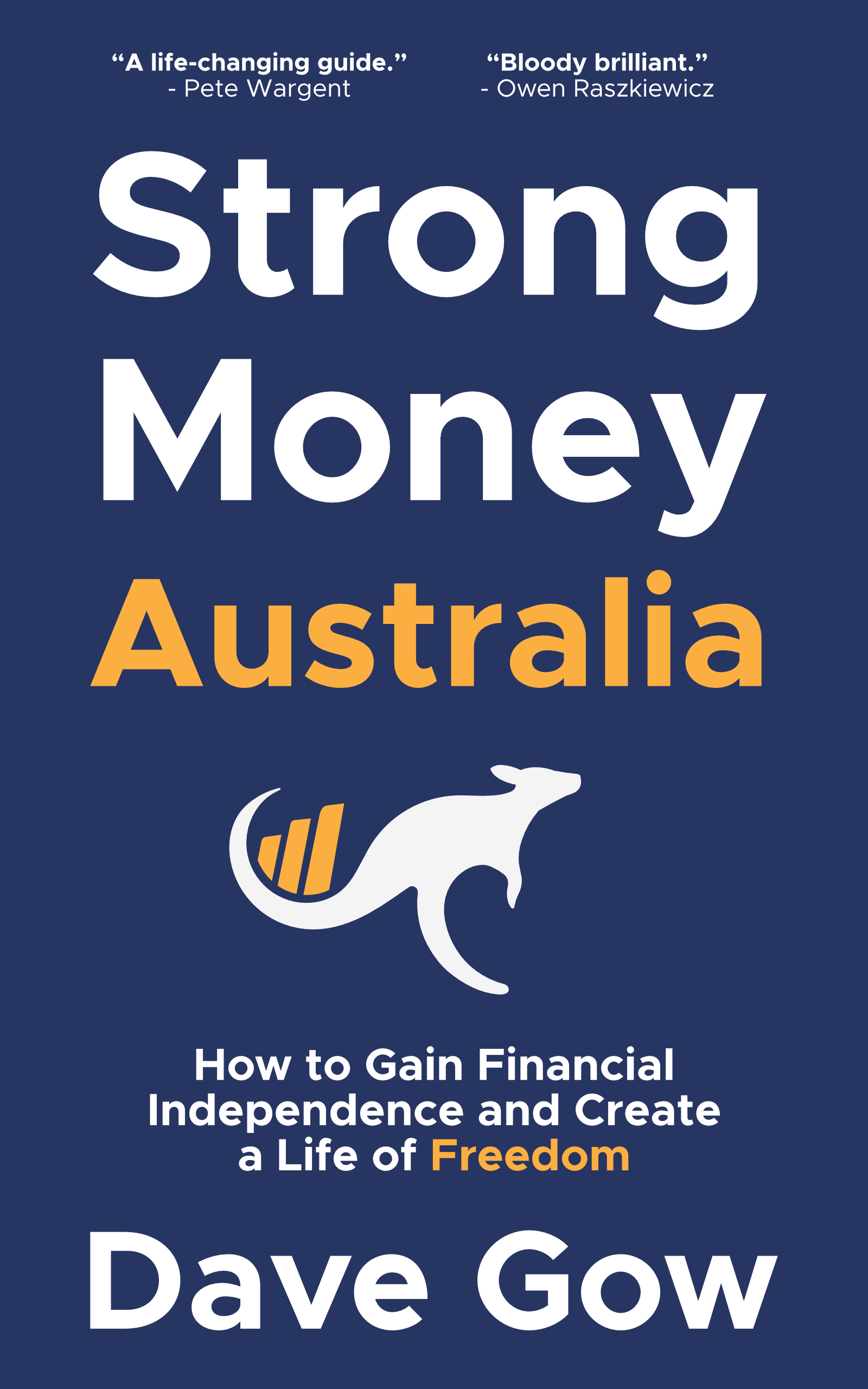
📘 My Book
Your complete guide financial independence in Australia. Available on Amazon, Audible and Spotify.
🏡 Mortgage Broker
Deanna and her team have helped me and many readers with home loan strategies over the years (including debt recycling). Check them out.
💼 Financial Advice
For those wanting personalised guidance with strategy, super, tax, or retirement, I can connect you with someone I trust. Find out more.
If you use the above services, this blog may receive a benefit at no extra cost to you. I only recommend things I use myself and genuinely believe in – thanks if you choose to check them out.

How to overcome the traps preventing you from claiming your freedom and living your ideal life.
My thoughts on risk and investing after FI. How I define ‘enough’ and follow-up questions on my geared super strategy.


Money, freedom, and a better life - delivered to your inbox
Practical insights to help you build wealth & actually enjoy it.